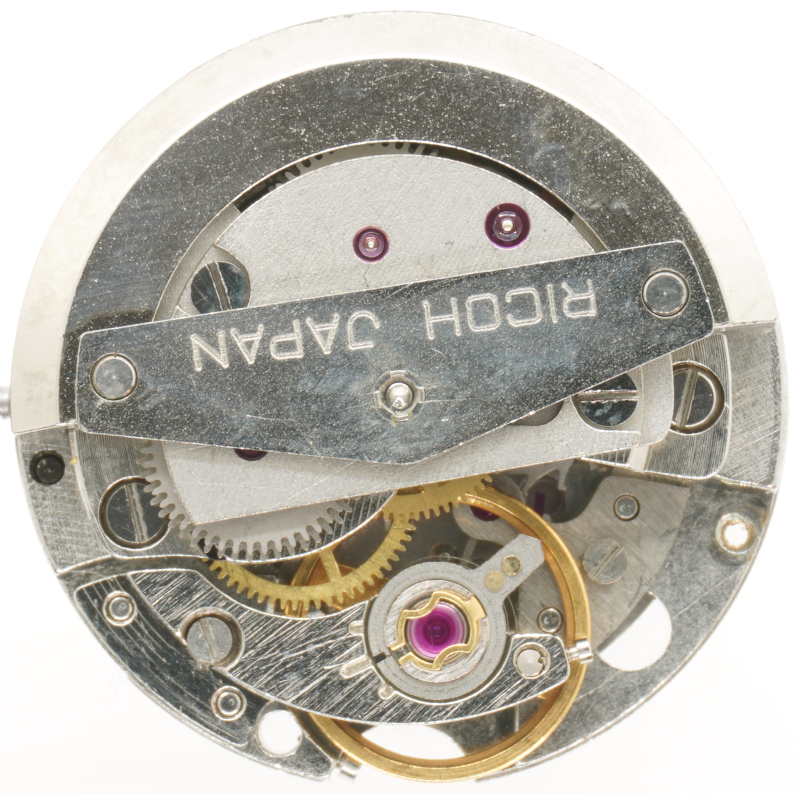
Ricoh 259
Description
Small but fine: The Ricoh 259 is a Japanese ladies’ watch movement measuring just 7 3/4 lignes (17.2 mm) in diameter.
While the exact date of production can no longer be determined, the design of the watch in which it is fitted suggests it dates back to the 1970s.
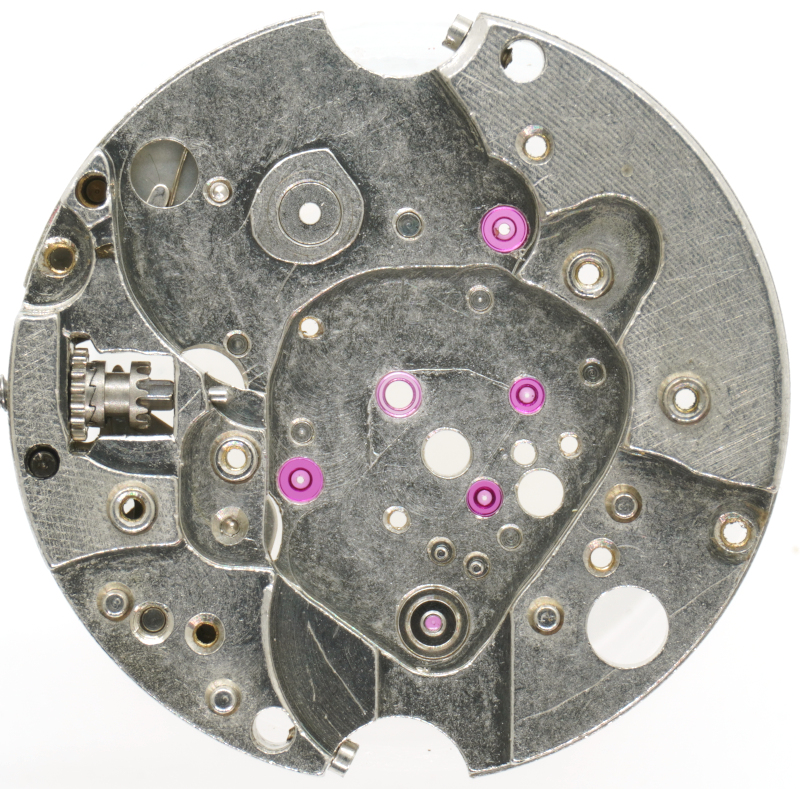
base plate
The finishing of the movement is impeccable; all important wheel, even the slow turning central minute wheel, are jeweled, as are parts of the simple yet highly effective automatic mechanism.
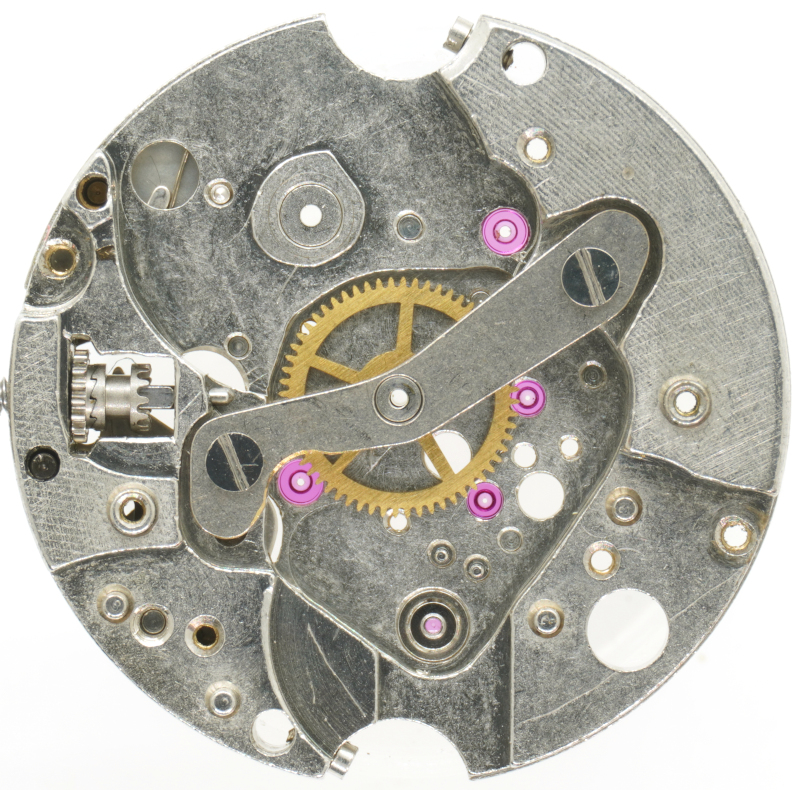
base plate with central minute wheel
The traditional movement layout features a center minute wheel that is driven directly by the barrel.
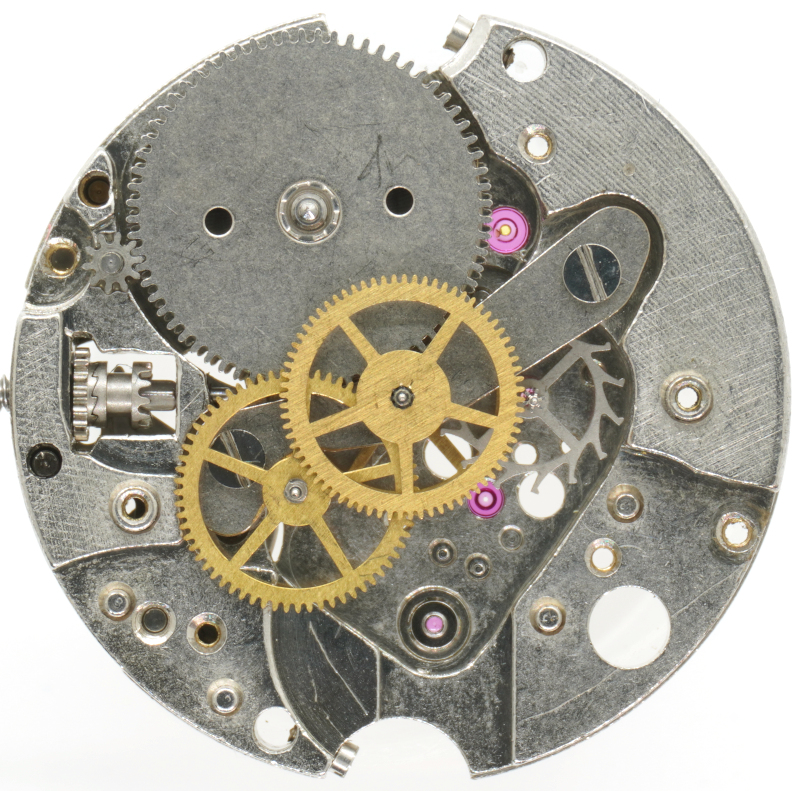
gear train
The Ricoh 259 also features a third wheel driven by the minute wheel, followed by the directly driven center seconds wheel and the escape wheel.
Into the latter engages the pallet lever of the escapement.
For winding, a cantilevered intermediate winding wheel (positioned at 10 o’clock) is used; this disengages the crown wheel during automatic winding. This movement does not have a traditional click mechanism!
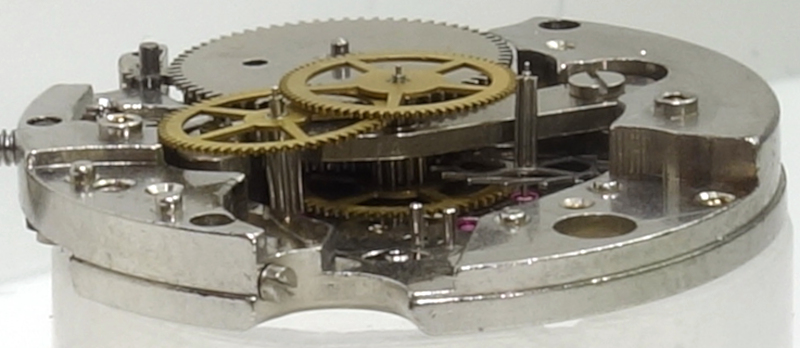
side view of the gear train
Somewhat unusually for Japanese movements, the gold-colored, two-arm balance wheel is mounted in a pair of Incabloc shock-protection units; typically, Japanese movements utilize proprietary shock-protection systems.
The balance operates at a medium-fast frequency of 21,600 semi-oscillations per hour, with adjustments possible only via the hairspring key; there is no movable hairspring stud carrier.
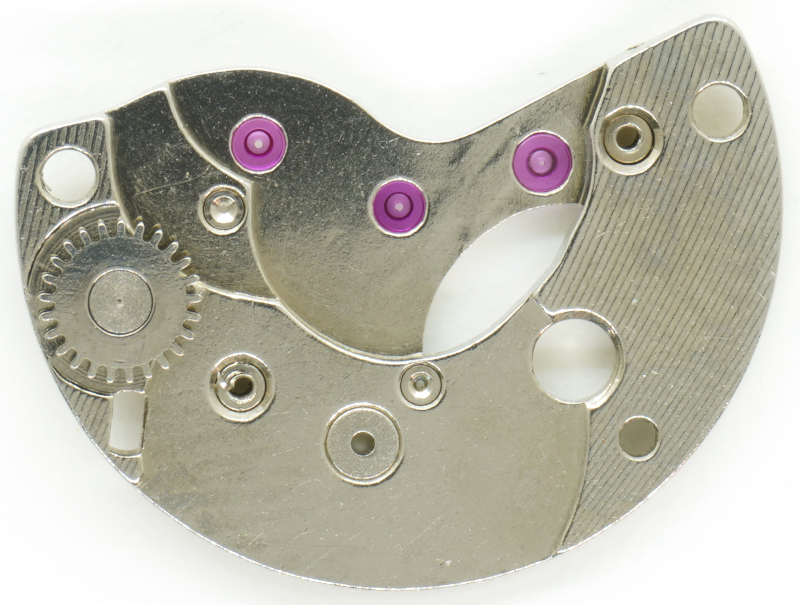
gear train bridge, inside
The crown wheel is located on the inside of the train bridge. This bridge is difficult to install due to the floating transmission wheel and the crown wheel, which is supported only by its arbor (and consequently tends to fall downwards).
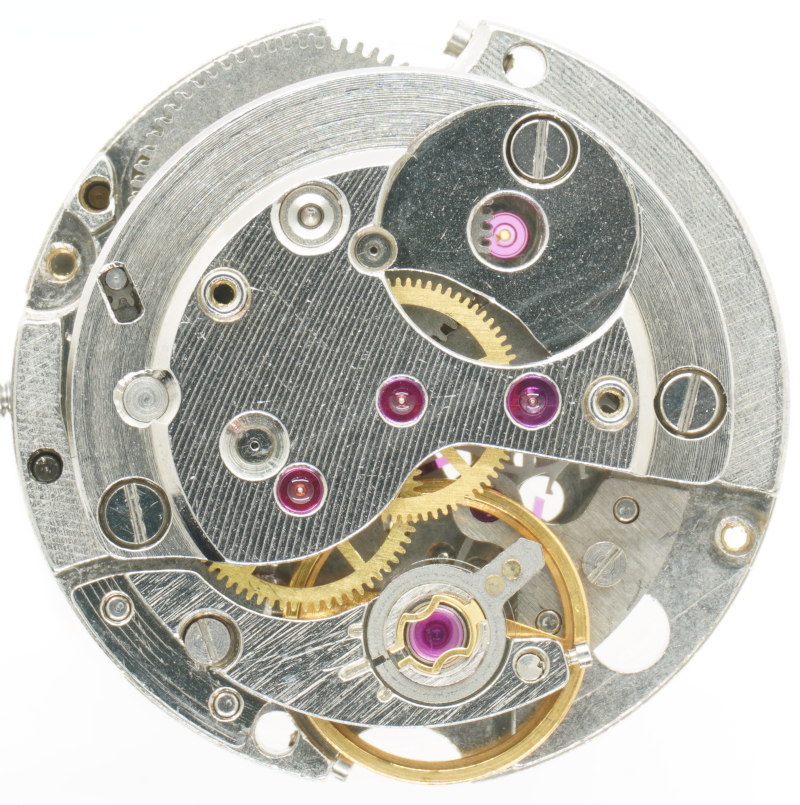
w/o selfwinding mechanism
The selfwinding mechanism is mounted on the top of the train bridge; the reduction wheel, which engages with the barrel ratchet wheel, is beared on the bottom of the main plate.
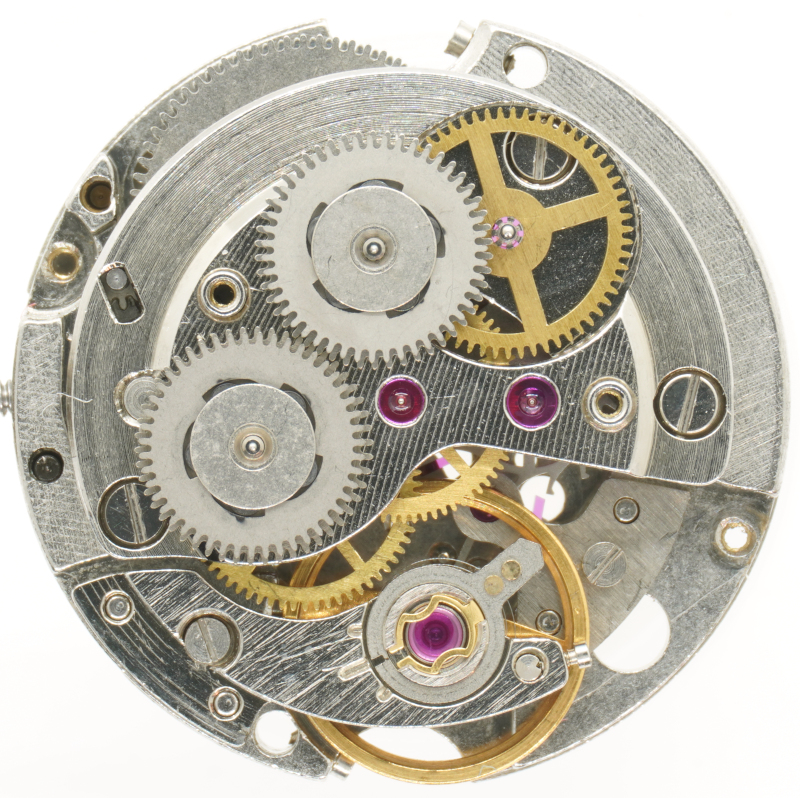
selfwinding gear train
The selfwinding mechanism features a relatively simple design utilizing two roller changer wheels and a reduction wheel. The underside of the changer wheels engages on both sides, while the upper side meshes with the rotor.
Depending on the direction of the rotor’s rotation, one of the two changer wheels engages with the reduction wheel, while the other runs freely.
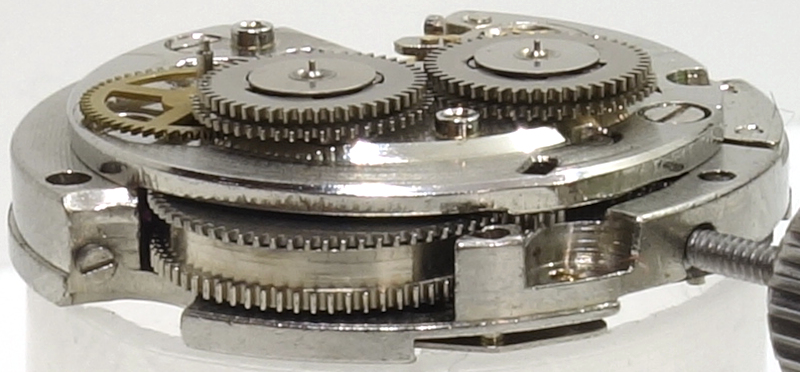
side view of the selfwinding gear train
So, what we have here is a mechanical rectifier that manages without even springs or a detent mechanism!
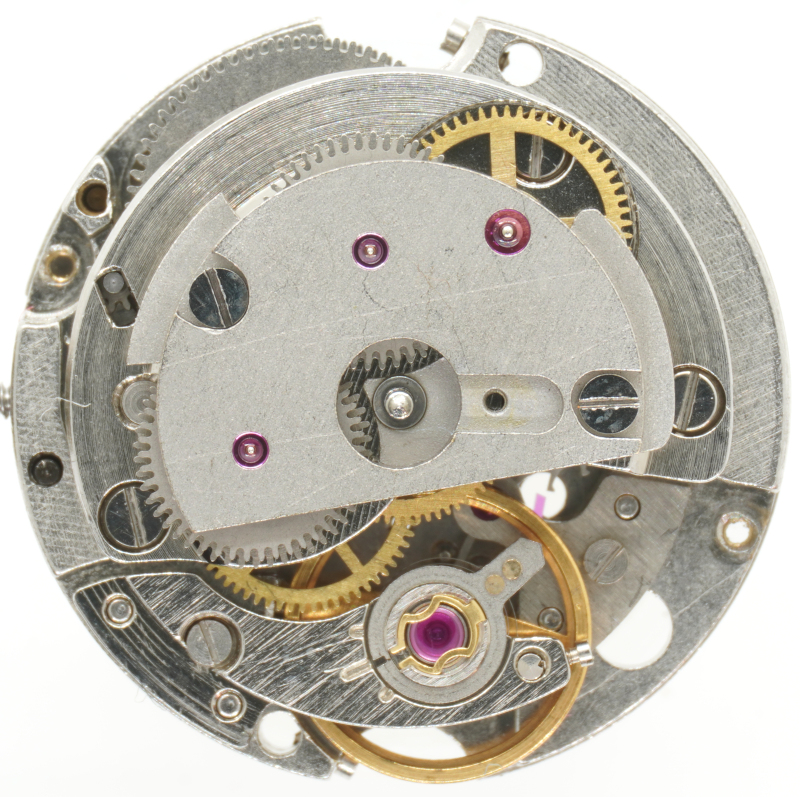
w/o oscillating weight
As can be seen, the oscillating weight is mounted on an axle.
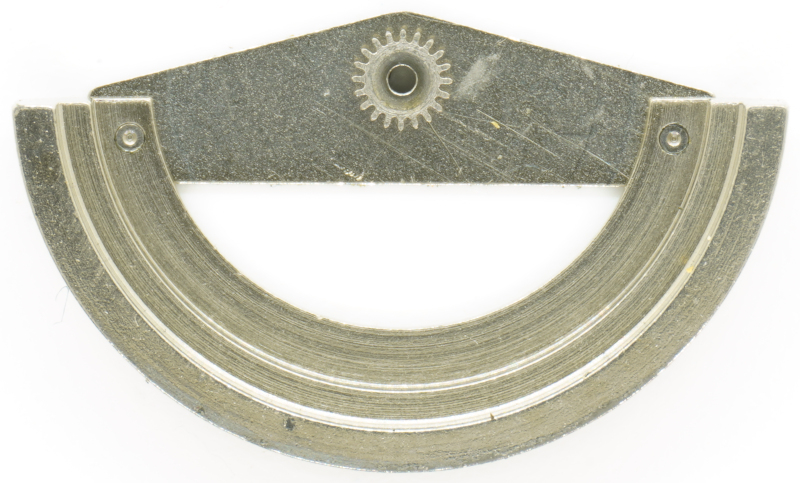
oscillating weight
It consists of a semicircular heavy-metal arc and a lightweight metal plate, designed with slight flexibility and riveted to the heavy-metal arc, and features a pinion that engages with the aforementioned changer wheels.
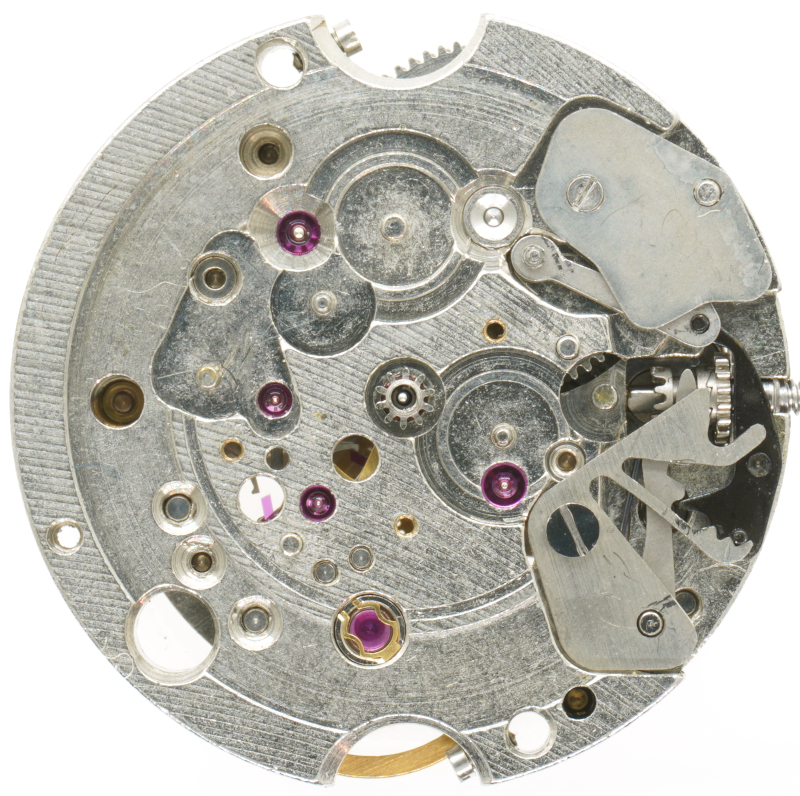
empty dial side
The bare dial side still looks innocuous; here, you can clearly see the yoke winding system, as well as the preparations for the date correction mechanism (top right, at the 1 o’clock position).
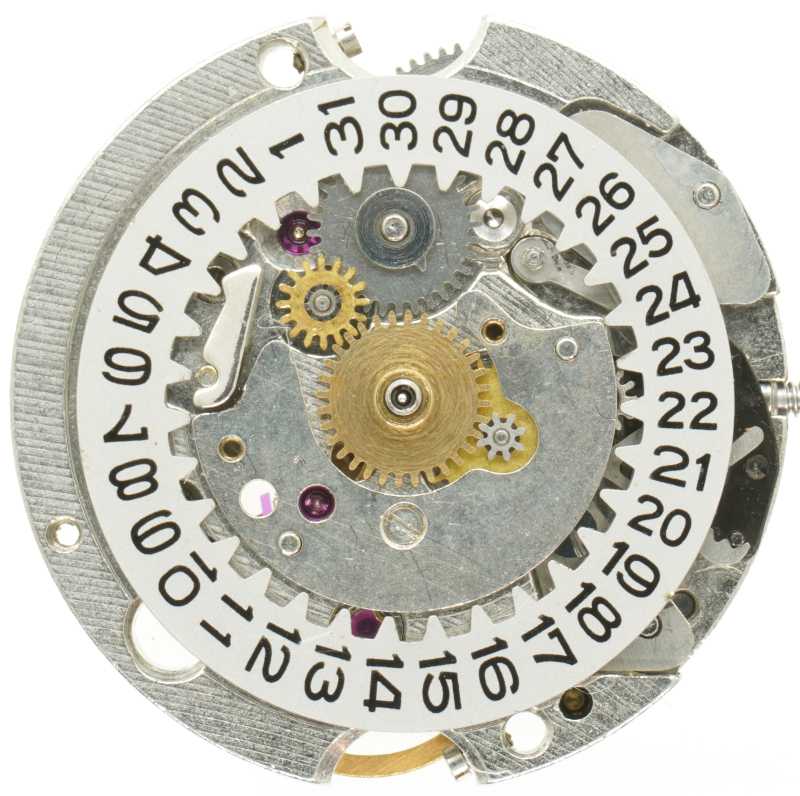
calendar mechanism
Without a cover, the date mechanism is under tension, making assembly nearly impossible. The spring lever that engages the date disc, mounted only horizontally and supported on only one side, is particularly maddening for the watchmaker!
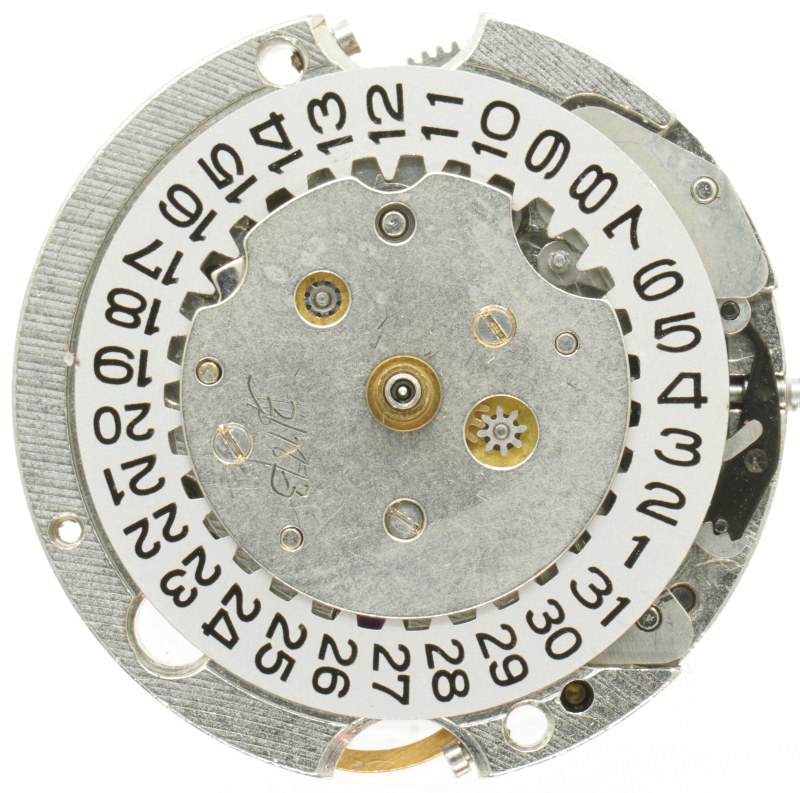
Ricoh 259: Dial side
With the date mechanism cover installed, the Rihoh 259 makes an almost ordinary impression, giving no hint of the effort required for its assembly.
Technical data
| Manufacturer: | Ricoh |
| Caliber: | 259 |
| Size: | 7 3/4''' (measured: 17,2mm) |
| A/h: | 21600 |
| Number of jewels: | 17 |
| Escapement: | Pallet lever |
| Balance types: | monometallic anular balance (two legs) |
| Shock protection(s): | Incabloc |
| Balance bearing / direction hairspring: | Counterclockwise |
| Moveable stud: | no |
| Adjust mechanism: | Hairspring key |
| Construction: |
|
| Construction type: | solid construction |
| Winding mechanism: | yoke winding system |
| Setting lever spring: | 2 holes |
| Attachment of setting lever: | plugged |
| Features: |
|
| Inventory number: | 24062 |
Usage gallery
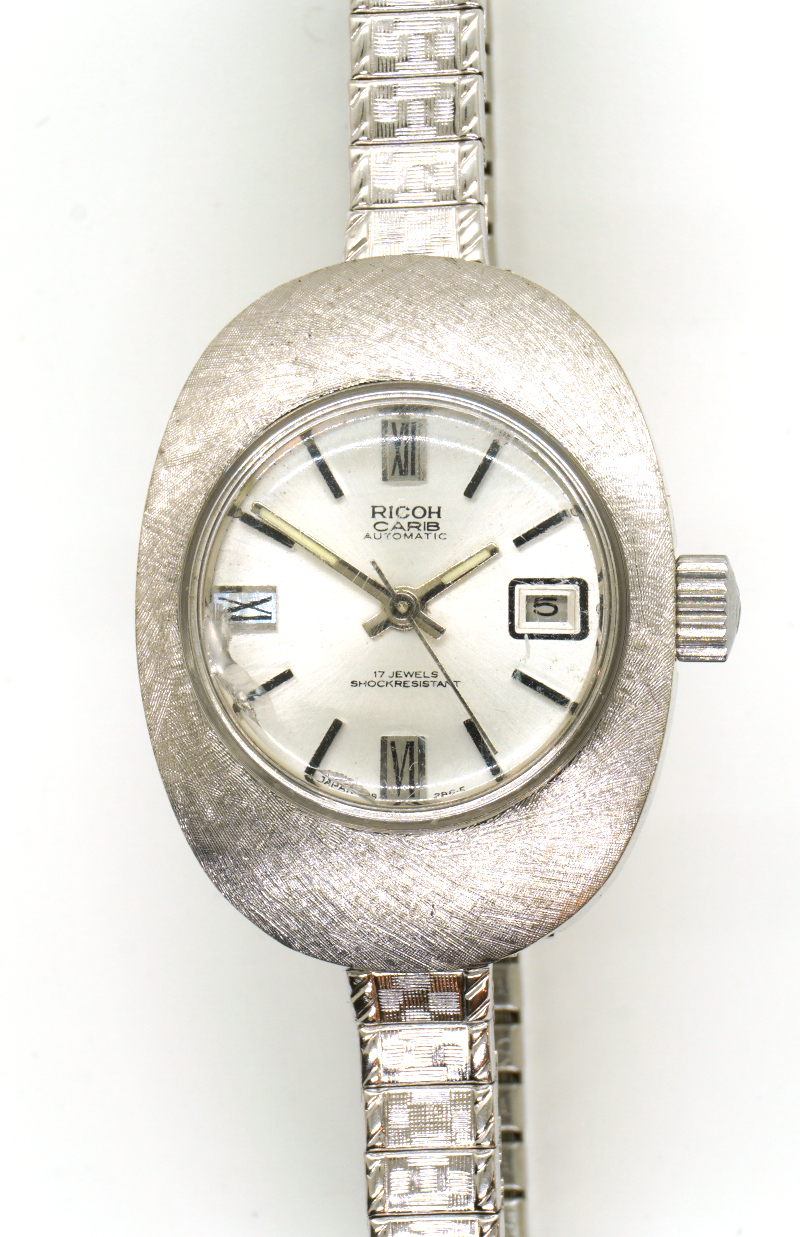
Ricoh Carib Automatic ladies' watch